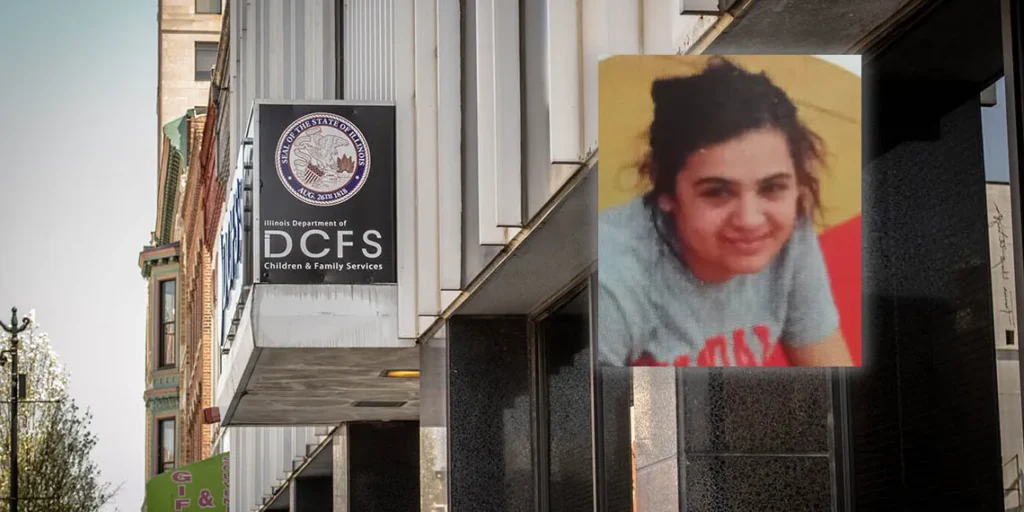
I’ve spent decades fighting for children’s rights, and I thought I’d seen the worst of systems who fail kids. Then I read about Mackenzi Felmlee, and I realized that Illinois’ DCFS is exactly where it was 36 years ago when the landmark ACLU class action lawsuit (B.H. v. Johnson) had just been filed. B.H. v. Johnson was meant to reform the Illinois child protection system, but the treatment of children in state care has actually deteriorated rather than improved. There were too few placements, case workers monitoring children, too high case loads and to few therapeutic services. Despite the Consent Decree and the appointment of a Special Master by the Federal District Court, Children are still being physically abused, sexually abused and otherwise harmed in the foster care system that is supposed to protect them by the negligence of DCFS.
What Happened to Mackenzi?
Mackenzi was 18 when she died in May 2024. She’d been in foster care since she was 14, living with Shameka Williams in what should have been a safe home in Fairview Heights, Illinois. Instead, according to prosecutors, that home became a place of torture that ultimately killed her. Last week, Williams and her mother, Cornelia Reid, were arrested and charged with first-degree murder. The details in the indictment are horrifying, and they represent everything that’s wrong with how Illinois DCFS protect vulnerable kids who have already been abused and neglected. Many parents ask, “What did I do that was so bad when my child has been physically abused or tortured, sexually abused or emotionally destroyed by DCFS.”
When police found Mackenzi at the bottom of a staircase on May 11, 2024, she was unresponsive. Williams and Reid claimed it was an accident, but the evidence tells a different story. At the hospital, doctors saw extensive bruising and injuries in various stages of healing all over her body. This wasn’t a one-time incident – this was ongoing abuse.
The medical examiner determined that Mackenzi died from a pulmonary embolism caused by Williams and Reid physically restraining her legs. But that’s just how she died. The indictment describes months or years of systematic torture: forced standing for hours while repeating phrases, being struck in the face repeatedly, and perhaps most disturbing of all, having her nose and mouth blocked with material covered in human waste. Police found evidence of this abuse documented on a cellphone. Think about that for a moment – someone was taking photos and videos of torturing this young woman. The cruelty is almost incomprehensible. What makes this even more tragic is that Mackenzi had aged out of traditional foster care but remained a ward of the state. She was technically an adult but still vulnerable, still dependent on the system that was supposed to protect her. And that system failed her completely.
Where Was Everyone?
Here’s what keeps me up at night about this case: Mackenzi was in Williams’ care for four years. Four years. How does a child suffer this level of abuse for that long without anyone stepping in?
Where were the caseworkers? The home visits? The safety checks that are supposed to happen regularly when kids are in state care? Medical professionals saw injuries in “various stages of healing” – that’s social work speak for “this has been going on for a long time.” Someone should have caught this.
I’ve worked on too many cases where warning signs and red flags were ignored or missed entirely. But this case seems to go beyond even that. This appears to be a complete breakdown of oversight at every level.
The Illinois Department of Children and Family Services hasn’t responded to questions about this case yet. That concerns me deeply. We need transparency about what happened here, what safeguards were in place, and why they didn’t work.
This isn’t an Isolated Problem
Unfortunately, Mackenzi’s case isn’t unique. We see variations of this story across Illinois and child welfare systems throughout the country – children placed in foster care for their protection who end up suffering worse abuse than what they were removed from originally.
The foster care system is supposed to be a safety net, but too often it becomes another source of trauma. Kids who have already been hurt get hurt again, sometimes fatally, by the very people trusted to care for them.
Part of the problem is that we don’t do enough screening of foster families. Background checks aren’t comprehensive enough. Training is often minimal. And once kids are placed, ongoing supervision is frequently inadequate.
We also don’t do enough to address the root causes of why kids need foster care in the first place. But that’s a conversation for another day. Right now, we need to focus on making sure that when children are placed in care, they’re actually safe.
What Needs to Change
I’ve been advocating for foster care reform for years, and cases like Mackenzi’s show just how urgent these changes are. We need legislatures that will appropriate sufficient appropriations to protect these voiceless children with more case workers and higher pay for case workers, better screening processes that look not just at foster parents but at everyone in the household who might have contact with children and more placements that are supported with wrap around services and skilled therapists with higher reimbursement rates.
Foster parent training needs to be more comprehensive and ongoing. Taking care of traumatized children requires specialized skills that most people don’t naturally have. We need to prepare foster families for the realities of caring for kids who have experienced abuse and neglect. Most importantly, we need much better oversight. Social workers need smaller caseloads so they can actually spend time with the children they’re responsible for. We need better licensing professionals so that not just anyone can have the privilege of caring for these vulnerable, traumatized children. Home visits need to be more frequent and more thorough. And workers need better training to recognize signs of abuse. We need professional and therapeutic foster care placements with more highly trained parents and wrap around therapeutic services. Technology helps too. Better documentation systems could help track concerning patterns before they escalate to tragedy. But technology is only as good as the people using it.
Justice for Mackenzi
Williams and Reid are facing serious charges, as they should be. First-degree murder, involuntary manslaughter, battery, intimidation, and unlawful restraint. If convicted, they could spend the rest of their lives in prison.
But criminal charges against the perpetrators aren’t enough. We also need accountability from the system that allowed this to happen. The state of Illinois had a legal duty to protect Mackenzi, and they failed. That failure needs to have consequences too.
I expect that if the true facts are revealed by DCFS, that we’ll see civil litigation in this case, and we should. Monetary damages can’t bring Mackenzi back, but they can provide some measure of justice and hopefully create incentives for better practices going forward.
This case might also set important legal precedents about institutional liability when foster care oversight fails this catastrophically. Courts are increasingly recognizing that government agencies can’t just place children and walk away – they have ongoing obligations to ensure safety.
Moving Forward
As this case works its way through the courts, we can’t lose sight of the bigger picture. There are thousands of children in foster care right now who are depending on DCFS and other state child protection systems to get this right. They deserve better than what Mackenzi got. We need state legislators to strengthen oversight requirements and provide adequate funding for child welfare agencies. We need those agencies to implement better monitoring protocols and hire qualified staff. We need communities to support foster families but also to speak up when something seems wrong. And we need legal professionals to hold everyone accountable – not just the individual abusers, but the systems that enable abuse through negligence and indifference.
The Bottom Line
Mackenzi Felmlee should be alive today. She should have had the chance to build a life beyond the trauma of her childhood. Instead, she died horribly at the hands of people who were supposed to protect her, while a system that was supposed to oversee her care looked the other way.
Her death is a tragedy, but also can be a call to action. We can’t bring Mackenzi back, but we can make sure her death means something by using it as a catalyst for the reforms that are desperately needed.
The foster care system exists to protect children, not to subject them to additional trauma. When that system fails as completely as it did in Mackenzi’s case, we all bear responsibility for demanding better.
At Justice for Kids, we won’t let this case and other similar cases throughout our nation fade from memory. We’ll keep pushing for the changes that could prevent the next tragedy. Because every child deserves safety, dignity, and protection – especially those who have already suffered so much. No parent should ever ask the question what did I do that was so bad that my child deserved to die in the system that was supposed to protect her. And why has Illinois DCFS not fixed a system after 36 years of class action litigation?

Julianna B. Walo, Esq.
Attorney, Justice for Kids
Kelley Kronenberg-Chicago, IL
754-888-KIDS (5437)
Email
Bio